Contemporary Art Collecting: A Beginner's Guide for Gay Men
Reading time: 11 minutes
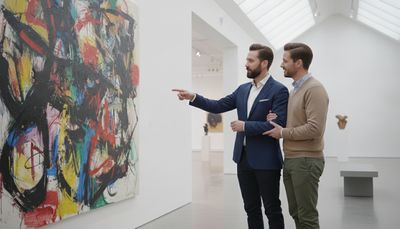
You've walked into a Chelsea gallery opening with your affluent partner, champagne in hand, surrounded by conversations about emerging artists and auction estimates. Everyone seems fluent in this language of provenance and edition numbers while you're wondering if that $15,000 price tag includes the frame. Art collecting gay men navigate a world where cultural capital matters as much as financial investment, and knowing the basics transforms you from observer to participant in these elevated circles.
The contemporary art market reached $65 billion in global sales during 2022 according to Art Basel and UBS's annual report, with LGBTQ+ collectors representing a growing segment of serious buyers. This isn't about pretending expertise you don't have. Building an authentic collection starts with understanding fundamental principles that even seasoned collectors once had to learn.
Why Art Collecting Gay Men Find This Investment Meaningful
Contemporary art offers more than wall decoration for your newly upgraded apartment. It represents cultural literacy in affluent gay social networks where gallery openings serve as prime networking venues. Your collection becomes a conversation starter at dinner parties, a reflection of your developing taste, and potentially a financial asset that appreciates over time.
LGBTQ artists have shaped contemporary movements from the Pictures Generation to queer abstraction. Supporting these voices while building wealth creates alignment between values and investment. David Wojnarowicz's works now sell for six figures at major auctions, proving that cultural significance and market value often intersect.
Starting your collection demonstrates commitment to self-improvement beyond physical appearance. While a polished grooming routine makes immediate impressions, art collecting reveals intellectual curiosity that sustains long-term arrangements with cultured partners.
Setting Your Contemporary Art Budget Realistically
Forget the auction house drama you see on television. Most art collecting gay men begin with works priced between $500 and $5,000, not Basquiat paintings requiring seven-figure bank transfers. Establishing a clear budget prevents uncomfortable conversations about money while protecting your financial stability.
The 5% rule provides useful guidance: invest roughly 5% of your liquid assets in art annually if you're serious about building a collection. Someone with $20,000 in savings might allocate $1,000 for their first year of collecting. This approach allows gradual portfolio growth without jeopardizing essential expenses or emergency funds.
Young emerging artists often price works accessibly to build their collector base. A recent MFA graduate from Yale or CalArts might offer paintings for $1,200 to $3,000. These entry points let you acquire museum-quality pieces before the artist's market explodes. Felix Gonzalez-Torres sold works modestly before his practice was recognized as groundbreaking.
Where Your Money Goes Beyond the Artwork
The sticker price represents just one component of art ownership costs. Factor in framing expenses ranging from $200 to $800 for professional museum-quality presentation. Insurance adds another consideration, though renters or homeowners policies often cover art up to $2,500 without special riders.
Transportation and installation matter when acquiring larger pieces. Professional art handlers charge $150 to $400 for local delivery and hanging services. These details separate serious collectors from impulsive buyers who damage works through amateur installation attempts.
Identifying Emerging Artists Worth Your Investment
Art collecting gay men gain advantage by recognizing talent before the broader market catches on. Recent graduates from prestigious MFA programs including Columbia University, UCLA, and the Rhode Island School of Design represent fertile hunting grounds. Their thesis exhibitions often showcase mature bodies of work available at pre-career prices.
Gallery representation signals professional validation but doesn't guarantee quality. Visit smaller galleries in neighborhoods like Bushwick in New York, Boyle Heights in Los Angeles, or Kreuzberg in Berlin where emerging artists show before commercial galleries recruit them. These spaces offer direct studio prices without the 50% gallery commission markup.
Social media transformed artist discovery, though Instagram popularity doesn't always correlate with investment potential. Look for artists with museum exhibition history, positive critical writing in publications like Artforum or Frieze, and consistent studio practice spanning multiple years. According to Artsy's 2023 collector survey, 73% of collectors under 40 discovered artists through online platforms.
Red Flags That Signal Problematic Purchases
Avoid artists whose entire practice seems designed for Instagram virality without conceptual depth. Trendy subjects or techniques that saturate the market typically crash within two to three years. Remember the rise and fall of zombie formalism around 2014, when derivative abstract paintings flooded galleries before collector interest evaporated.
Be skeptical of artists who change styles dramatically every six months chasing market trends. Consistent development of a recognizable voice indicates serious practice. Compare early and recent works to assess whether the artist shows meaningful evolution versus random experimentation.
Understanding Art Market Values and Pricing
Primary market purchases happen directly from galleries representing living artists. Secondary market transactions occur at auction houses or between collectors for previously sold works. Primary market offers entry-level accessibility, while secondary market prices reflect established demand and speculation.
Edition sizes dramatically affect value in photography, printmaking, and sculpture. A photograph in an edition of 5 commands higher prices than one in an edition of 100. Artists proofs (AP) or printer proofs (PP) outside the numbered edition sometimes carry premium value due to scarcity.
Provenance documentation proves ownership history and authenticity. Request certificates of authenticity, gallery invoices, and exhibition history for any significant purchase. These papers become crucial if you later consign the work to auction or sell privately. Major auction houses like Sotheby's require thorough provenance before accepting consignments.
Where Art Collecting Gay Men Actually Buy Contemporary Works

Commercial galleries remain the traditional entry point for serious collectors. Build relationships with gallery directors by attending openings regularly, asking informed questions, and following up on exhibitions that genuinely interest you. These connections grant access to viewing rooms and pre-opening previews where choice works get reserved.
Art fairs concentrate hundreds of galleries in convention centers for three to four days. Frieze, Art Basel Miami Beach, and The Armory Show in New York provide efficient market overviews. Fair pricing sometimes includes negotiation flexibility that permanent gallery locations don't offer, particularly on the final day.
Online platforms democratized art buying through websites like Artsy, Saatchi Art, and 1stDibs. These marketplaces offer price transparency and convenient browsing, though viewing works in person before purchasing remains advisable for pieces over $2,000. Color reproduction and scale perception vary significantly between screens and physical objects.
Auction Houses for Bold Collectors
Christie's and Sotheby's conduct online-only sales featuring contemporary works starting around $800. These auctions let you compete globally while learning bidding mechanics. Review condition reports carefully and add 25% to hammer prices for buyer's premium and taxes when calculating total costs.
Regional auction houses in secondary cities often feature undervalued contemporary works from local estates. These venues require more research expertise but reward diligent collectors with below-market acquisitions.
Building a Cohesive Collection With Personal Meaning
Successful collections reflect genuine curiosity rather than calculated investment strategy. Start by identifying movements, mediums, or themes that resonate emotionally. Perhaps queer identity in portraiture, environmental concerns in conceptual photography, or abstract explorations of color theory speak to your experiences.
Limiting your focus creates collecting depth over superficial breadth. Someone concentrating on contemporary ceramic sculpture develops expertise and market knowledge that random purchasing never achieves. This specialization also makes your collection more interesting to others in affluent circles who appreciate curatorial vision.
Document your collection thoroughly with professional photographs, purchase records, and exhibition histories. Create a simple spreadsheet tracking acquisition dates, prices, dimensions, and provenance details. This organization proves invaluable for insurance claims, estate planning, or eventual sales.
Displaying Your Collection to Maximum Effect
Professional installation elevates affordable works into museum-quality presentations. Invest in proper lighting with adjustable picture lights or track systems that highlight specific pieces. Hardware stores sell basic solutions, but specialist art lighting companies like Modulightor offer superior results for significant works.
Rotation keeps your collection fresh and prevents light damage to sensitive mediums. Store works properly in acid-free materials, climate-controlled spaces, and protective coverings. Never hang valuable pieces in direct sunlight or humid environments like bathrooms.
Your collection creates natural talking points when hosting dinners or entertaining your partner's professional contacts. Prepare brief stories about each artist and your acquisition decision. This demonstrates thoughtfulness beyond superficial status signaling.
Tax Implications and Legal Considerations
Art purchases don't qualify as tax-deductible investments unless you donate them to qualified institutions. Consult with tax professionals before making significant acquisitions. Capital gains taxes apply to profitable sales, with rates depending on holding periods and total income levels.
Estate planning becomes relevant as collection values grow. Works passing to heirs face stepped-up basis valuations that affect inheritance taxes. Professional appraisals from certified valuers provide necessary documentation for tax purposes and insurance coverage.
Resources for Continuing Your Art Education
Reading improves your fluency in art market language and critical theory. Subscribe to Artforum, Art in America, and Hyperallergic for exhibition reviews and artist profiles. Books like "Seven Days in the Art World" by Sarah Thornton and "The $12 Million Stuffed Shark" by Don Thompson explain market mechanics with entertaining clarity.
Museum memberships grant access to curator talks, member previews, and educational programming. Young collectors councils at institutions like MoMA, LACMA, and the Whitney offer networking with peers while supporting nonprofit missions. These groups often organize studio visits and behind-the-scenes museum experiences.
Online courses through platforms like Coursera and Canvas Network provide art history fundamentals. Understanding modernist movements contextualizes contemporary practices and sharpens your ability to recognize innovation versus derivative work. Knowledge compounds over time, making you increasingly confident in acquisition decisions.
- Start with a defined budget representing 5% of liquid assets annually to build collections responsibly without financial strain
- Focus on emerging artists from prestigious MFA programs who show consistent studio practice and critical recognition before commercial success
- Document all purchases thoroughly with provenance papers, certificates of authenticity, and professional photography for insurance and future sales
- Develop specialized collecting interests in specific mediums, movements, or themes rather than acquiring random pieces without curatorial vision
- Build relationships with gallery directors through regular attendance at openings and informed conversations about exhibitions that genuinely interest you
Common Mistakes Art Collecting Gay Men Should Avoid
Buying art solely to impress others creates collections lacking personal meaning or coherent vision. Your partner and social circle recognize authentic enthusiasm versus calculated status purchases. This transparency applies equally to developing genuine self-worth in relationships rather than performing borrowed sophistication.
Overpaying for hyped artists at market peaks leads to regret when trends shift. The 2014 zombie formalism bubble saw collectors paying $20,000 for derivative abstract paintings now worth perhaps $2,000. Research price histories and career trajectories before committing significant funds to buzzworthy names.
Neglecting condition reports for auction purchases creates expensive surprises. Surface damage, restoration work, or fading significantly affects values. Request detailed condition documentation and consult conservation specialists for expensive acquisitions showing any concerns.
Frequently Asked Questions
What makes contemporary art a good investment for gay men starting collections?
Contemporary art offers cultural capital in affluent social circles while supporting LGBTQ artists whose work often appreciates as critical recognition grows. Unlike stocks or bonds, you enjoy aesthetic pleasure daily while building potential financial assets. The key involves buying quality works from emerging artists before their markets mature, allowing accessible entry points with growth potential.
How do I know if an artist's work will increase in value?
Look for consistent museum exhibition history, positive critical reviews in respected publications, gallery representation progression from smaller to more established spaces, and steady studio practice spanning multiple years. No guarantees exist, but these indicators suggest professional trajectory more reliable than Instagram follower counts or trendy subject matter.
What should I do if I can't afford works from established artists?
Focus on recent MFA graduates, local artists showing in smaller galleries, and limited edition prints from more famous names. A signed print from a recognized artist costs 10-20% of comparable original works while maintaining connection to their practice. Building relationships with emerging artists early in their careers offers accessibility and potential long-term value growth.
Where can I learn more about art market trends and pricing?
Subscribe to Artnet News and Artsy's market reports for data-driven analysis. Attend auction previews at Christie's and Sotheby's to study estimates versus final prices. Join museum young collectors councils for educational programming and peer discussions. Reading specialist publications like The Art Newspaper provides industry insights beyond gallery promotional materials.
What are the essential insurance considerations for new collectors?
Standard renters or homeowners policies typically cover art up to $2,500 total without special riders. Schedule individual pieces worth more than $1,000 on separate fine art policies with agreed-value coverage based on professional appraisals. Store documentation including purchase receipts, provenance papers, and condition photographs in fireproof safes or digital cloud storage for claim processing.
Your Path Forward as an Educated Collector
Art collecting gay men who approach this practice with patience and genuine curiosity build collections reflecting personal growth alongside financial investment. Start modestly with works that genuinely move you rather than pieces calculated to impress. Your developing expertise becomes evident through thoughtful acquisitions, proper care, and authentic enthusiasm when discussing your collection.
The contemporary art world welcomes serious new collectors willing to learn its languages and customs. Your journey from uncertain gallery visitor to confident buyer happens through consistent exposure, reading, and relationship building. Each acquisition teaches lessons about your aesthetic preferences, market mechanics, and curatorial vision.
Begin exploring galleries this weekend with fresh perspective on what constitutes smart collecting. Trust your developing eye while applying the practical frameworks outlined here. Your first purchase won't define your collection, but taking that initial step transforms you from observer into active participant in this rewarding cultural sphere.